SCHOOL OUTREACH
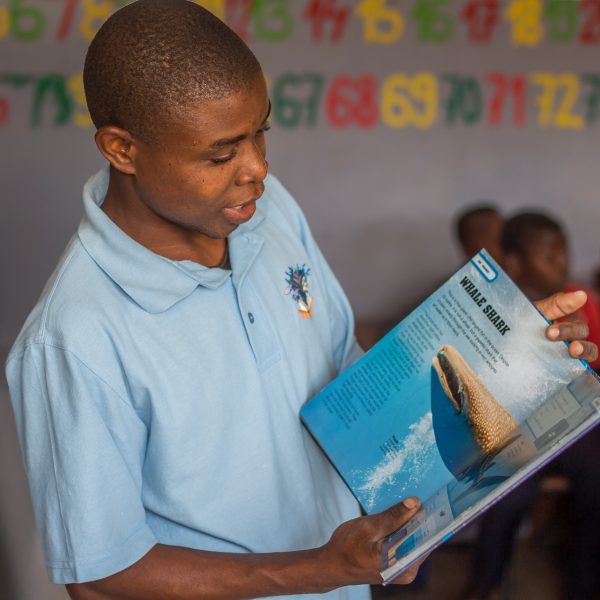
Education is the foundation of Love The Oceans’ community-led conservation model. We work in 2 local schools, delivering Marine Resource Management and Sea Safety lessons that introduce young people to the ocean systems they depend on and the role they play in protecting them. Our school program has reached over 1,000 children. Our lessons build a strong, accessible knowledge base in marine biology and conservation, covering topics such as sustainable fishing practices, seasonal closures, marine protected areas, and the long-term impacts of overfishing, helping students understand how conservation and community wellbeing are deeply connected. Sea safety education is embedded throughout, supporting safer ocean access and reducing risk in a region where many people rely on the ocean for daily survival. Our experience shows that students actively share what they learn at home, sparking conversations within families and fishing communities and helping shift attitudes over time.

OCEAN SCHOOL
Ocean School is Love The Oceans’ six-month adult education programme designed to build ocean literacy and local capacity from the ground up. Often described as a “zero-to-hero” syllabus, Ocean School bridges the gap between secondary-level biology and the level of ecological understanding needed to meaningfully engage in marine conservation work. The programme equips community members with the foundational knowledge that underpins Love The Oceans’ core projects that can sometimes be missing from the formal education locally, from fisheries research and coral reef monitoring to climate change impacts and marine governance. Developed by Love The Oceans’ Founder, Francesca Trotman, and Marine Biologist Yudmila Chunguane in collaboration with a Portuguese ecology lecturer, Ocean School combines structured theory with real-world context drawn directly from our work in Jangamo Bay. Lessons are delivered in our local office, creating an accessible learning environment for adult participants who usually have not had formal science education opportunities previously. Over the past two years, Ocean School has proven to be a powerful pathway into deeper engagement with conservation, with graduates going on to support research, outreach and community projects. Members of our Sea Her gender equity programme are currently completing the syllabus, marking another step towards inclusive, community-led marine stewardship.

IMPROVED LEARNING FACILITIES
Access to quality education is essential for long-term community resilience and effective conservation as poverty alleviation is intrinsically linked with successful conservation efforts. Alongside our education programmes, Love The Oceans has worked to improve the physical learning environments in the communities where we operate. With sponsorship from a local lodge, we raised funds and employed a local building team to construct 14 new classrooms across two schools in our area over the last 10 years. This investment has had a transformational impact. Its enabled the existing secondary school to be officially upgraded to a high school, creating access to formal education up to the age of 18 for the first time ever in our district. This milestone dramatically expanded educational opportunities for local young people and reduced the need for families to choose a child to send far from home to continue their schooling. Since then, we have continued to support school infrastructure where possible, including the construction of staff facilities and ongoing improvements to learning spaces. Our next priority is the construction of safe, functional toilet facilities, which are critical for student wellbeing, dignity and school attendance, particularly for girls. Unfortunately, limited funding over the past few years has meant we have been unable to progress further building work. In the meantime, our team continue to support schools by creating educational murals under the guidance of local teachers. These murals cover topics such as the hydrological cycle, marine ecosystems and the periodic table and help create brighter, more engaging learning environments and reinforce classroom teaching. If you or your organisation are able to support future school infrastructure projects in our communities, we would love to hear from you.

CHILDRENS SWIM LESSONS
In our community, 98% of people cannot swim, creating a major barrier to safety, opportunity and inclusive ocean governance. Without swimming skills, community members cannot monitoring marine ecosystems through data collection increasing meaningful participation in marine protected area management. Since 2016, Love The Oceans has taught over 3,000 children aged 4–18 how to swim, creating safer ocean access and opening pathways into marine science, conservation and leadership. Alongside lessons, we have trained the first local swim instructors in the district, building long-term capacity within the community. We are actively seeking funding to build the first community swimming pool in the area. Our long-term vision is for swimming education to be delivered by the community, for the community, in a dedicated pool that operates independently from Love The Oceans. Each year, we also raise funds to bring an external swim trainer to Mozambique to continue training new local instructors and strengthen programme sustainability. Swimming is not just a life-saving skill, it is a foundation for equity, education, inclusion and effective marine conservation.
OCEAN CONSERVATION CHAMPION PROGRAM
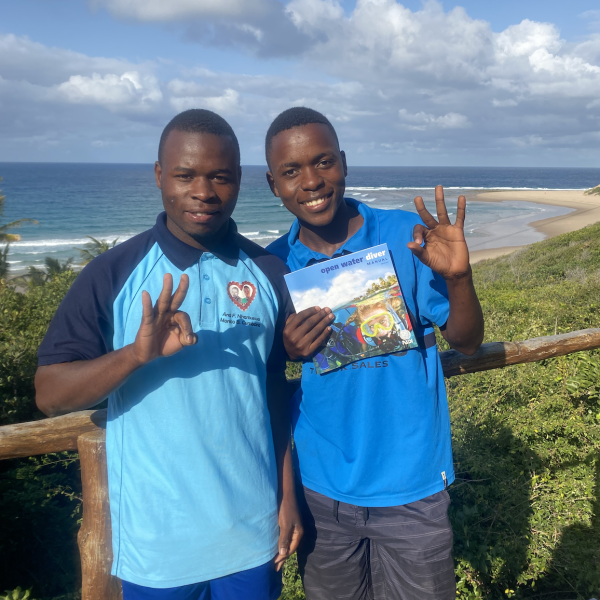
The Ocean Conservation Champion (OCC) Programme supports outstanding young adults (under 18s) from Jangamo Bay to become future leaders in marine conservation. Each year, Love The Oceans selects two top-performing students in local schools, creating a clear pathway from education into conservation and employment. OCCs receive tailored training and mentorship across Love The Oceans’ projects, gaining practical experience in fisheries research, biodiversity monitoring, community outreach and ocean governance. Alongside this, Champions are supported to build essential skills such as swimming instruction, PADI Discover Scuba Diving, data collection, public engagement and English language development. The programme is designed to bridge the gap between formal education and meaningful employment in marine and conservation-related fields. OCCs act as ambassadors within their communities, helping to raise awareness of marine conservation issues, supporting sustainable fishing initiatives, and contributing to the development and long-term management of Jangamo Bay’s proposed Marine Protected Area. The OCC Programme is a core part of our commitment to locally led, intergenerational conservation, ensuring that the future of ocean protection in Jangamo Bay is driven by the community itself.

FISHERMEN'S WATER SAFETY
Launched in 2025, Love The Oceans’ Fishermen’s Swimming Programme was created in direct response to a tragic drowning incident in the area, where multiple fishermen lost their lives after a boat capsized. The event highlighted a critical but often overlooked reality: many fishermen in Jangamo Bay rely on the ocean daily but do not know how to swim. This programme provides fishermen with swimming lessons designed to improve safety at sea and build confidence in the water. Alongside swimming training, participants receive essential life-saving and water safety instruction delivered by our Community Outreach Manager, following his RNLI-certified training in Zanzibar. By improving swimming ability and emergency response skills, the programme aims to reduce risk, prevent future loss of life, and strengthen long-term ocean safety within the fishing community.
AQUACULTURE
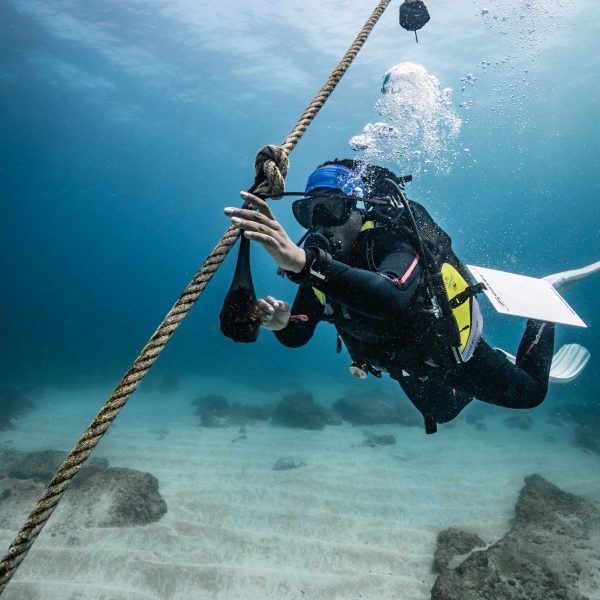
The Sea Her aquaculture programme sits within Love The Oceans’ alternative livelihoods work, recognising that poverty alleviation and conservation are intrinsically linked. In Jangamo Bay, mussel harvesting in the intertidal zone has traditionally been carried out by women, making this a naturally women-led project from the outset. This initiative supports women to cultivate mussels at sea by collecting naturally occurring spat that would otherwise outcompete itself on intertidal rocks. By relocating and growing mussels in the ocean to full size, the project creates a sustainable source of supplementary protein, reducing pressure on overfished reef systems and strengthening local food security. The project is currently in its growth trial phase, testing survival, growth rates and feasibility. Once trials are complete, Love The Oceans will launch the area’s first mini sustainable mussel farm. The project economically empowers women by creating an independent income stream outside of traditional fisheries. This financial autonomy plays a critical role in breaking harmful patriarchal cycles, increasing women’s decision-making power, and supporting bodily autonomy and informed choices. By centring women as active contributors to marine livelihoods and conservation, women are seen as active ocean users and are able to participate in local ocean governance meetings. The Sea Her aquaculture project delivers benefits for ecosystems, households, and long-term community resilience.
WOMEN'S SWIMMING LESSONS
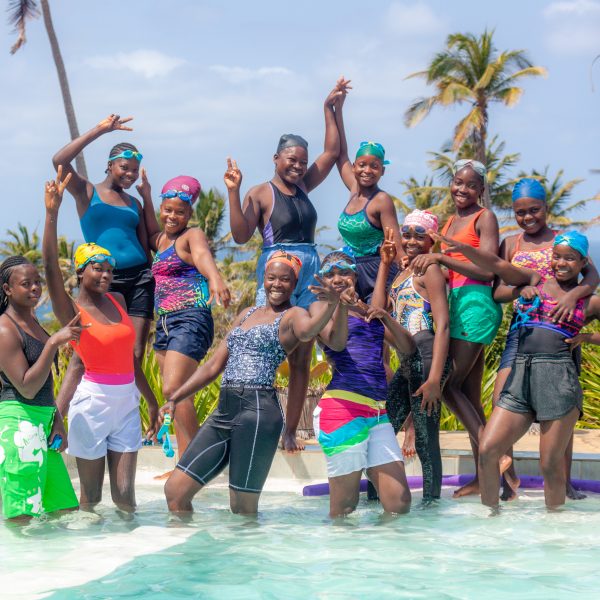
Access to the ocean is a prerequisite for meaningful participation in marine conservation, yet in Jangamo Bay the vast majority of women have never learnt to swim. Love The Oceans launched women’s swimming lessons in 2025 as part of the Sea Her Project to remove this fundamental barrier and create safe, inclusive access to ocean spaces. These lessons provide women with essential life-saving skills, reduce drowning risk, and build confidence in the water. Beyond safety, swimming enables women to actively participate in marine research, monitoring, and decision-making, from data collection to future involvement in locally managed marine areas. Without the ability to swim, women are effectively excluded from ocean governance and conservation efforts that directly affect their lives and livelihoods. The programme is delivered by female swim instructors Love The Oceans has trained, creating visible role models and strengthening long-term community ownership. Women’s swimming is not only about safety; it is about equity, empowerment, and ensuring conservation is shaped by all members of the community, not just those with historic access to ocean spaces.

SEXUAL HEALTH AND REPRODUCTIVE RIGHTS
Gender equity in conservation requires addressing the barriers women face beyond the ocean. As part of the Sea Her Project, Love The Oceans delivers a sexual health and reproductive rights program that strengthens women’s knowledge, agency and wellbeing, recognising that bodily autonomy is fundamental to meaningful participation in conservation and community decision-making. This programme was shaped by evidence from over 200 surveys conducted with local women, which highlighted major gaps in understanding around reproductive health, menstruation and contraception, alongside limited access to accurate information. These barriers directly affect girls’ education, women’s economic independence and long-term engagement in environmental initiatives. In response, we deliver culturally sensitive workshops with local health educators, covering reproductive anatomy, menstrual health management, contraception, sexual rights and consent. Sessions are designed to be practical, accessible and safe, creating space for open discussion in a context where these topics are often taboo. By improving health literacy and confidence, this work supports women to make informed choices about their bodies and futures, strengthening their ability to engage across Love The Oceans’ conservation programmes.
SUSTAINABLE FISHING PROJECT
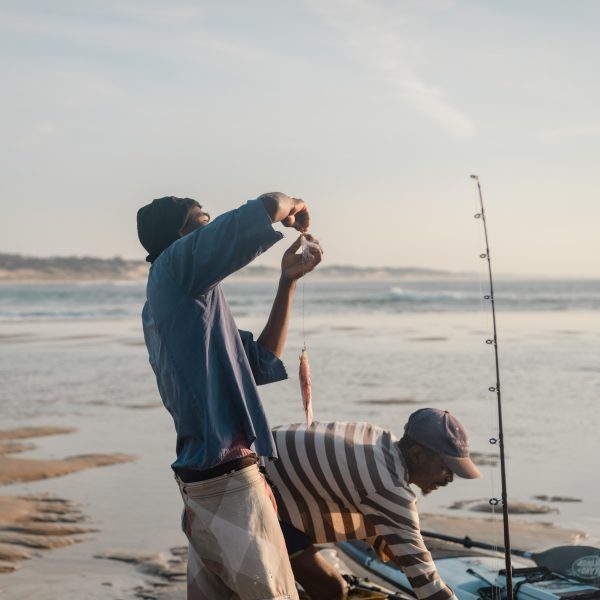
The Sustainable Fishing Project is Love The Oceans’ most ambitious and complex initiative, and the one with the greatest potential for long-term impact. At its core, the project supports local fishermen to transition away from destructive, nearshore fishing practices and towards safer, more sustainable methods that protect reef ecosystems while safeguarding food security and livelihoods. Working directly with fishing communities in Jangamo, the project provides access to kayak-based rod and line fishing on a structured check-in, check-out system. In order to participate, fishermen must give up unsustainable practices such as gill-netting or reef-based spearfishing and attend sustainability and safety training delivered by Love The Oceans’ community team. All fishing activity is monitored, including catch composition, effort and location, ensuring the project is evidence-led and accountable. This approach is underpinned by over a decade of fisheries and reef research conducted by Love The Oceans, which has revealed alarming declines in large herbivorous reef fish, a group critical to coral reef health. By enabling fishermen to access deeper waters and target pelagic species instead, the project reduces pressure on vulnerable reef systems, supports coral recovery and helps rebalance local ecosystems. The Sustainable Fishing Project is a locally led, science-driven pathway towards healthier reefs, safer fishing and more resilient coastal communities. It is also a critical building block for future marine protected area management in Jangamo Bay. We are actively seeking funding and partners to scale this work and unlock its full potential for people and planet.