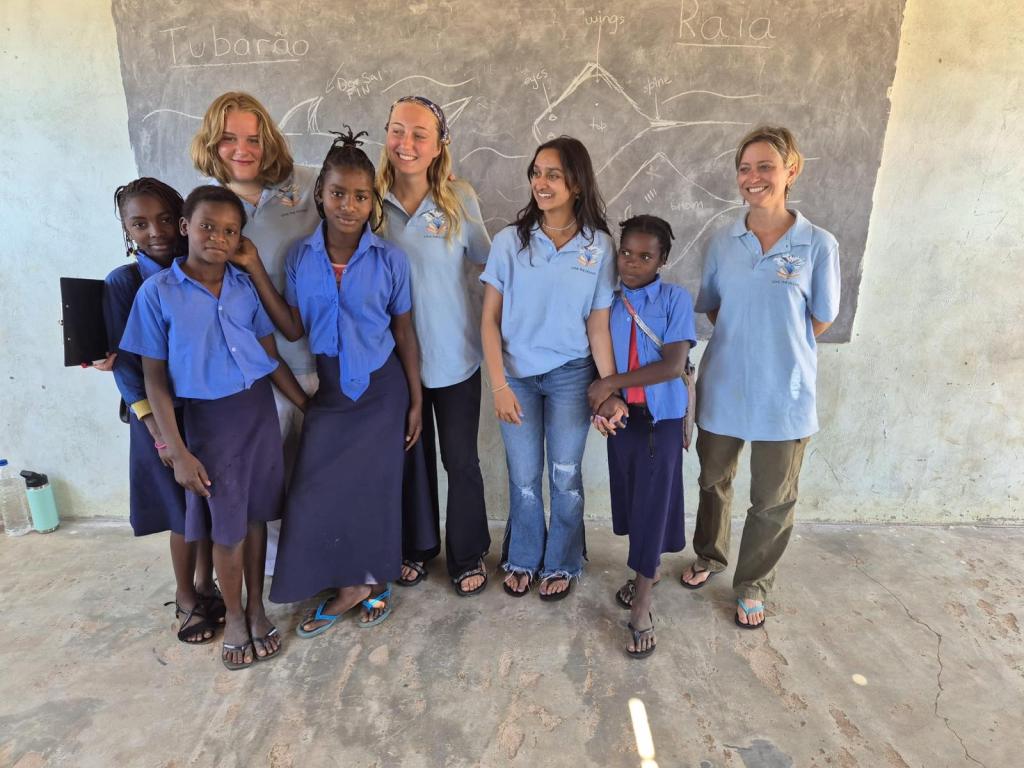
Another week at Guinjata school! This week’s theme was sharks and rays. We explained to the children how they differ from mammals, the threats posed by overfishing, finning or netting, and possible solutions for sustainable fishing that benefits local fishermen and the precious habitat of these magnificent animals. At the end of the week, students answered all the questions that summarized the lessons. Parabens! We also finished the paintings that decorate the school. After the singing whale and its escort of multicoloured fish, here’s the sad whale because it has ingested too much plastic. The moral: plastic is dangerous for marine animals. We hope the message will be heard!
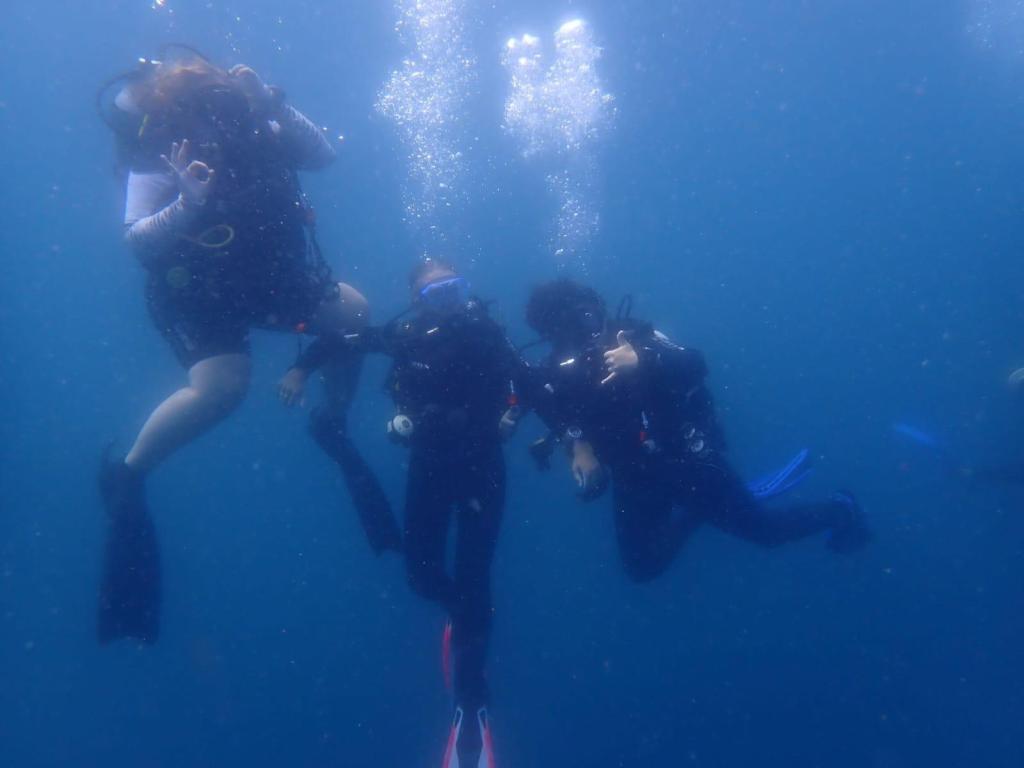
A group of us headed out to do some transect dives! Even though this is something we’ve gotten into a good rhythm with after a month of practice, we’re always learning and seeing even more! A blacktip shark here, a thorn-tail ray there, and huge schools of tropical fish we’ve never seen before! It’s always amazing to feel like we’ve contributed to the health of the ocean, but to also be able to witness its beautiful complexity is a treat unlike any other.
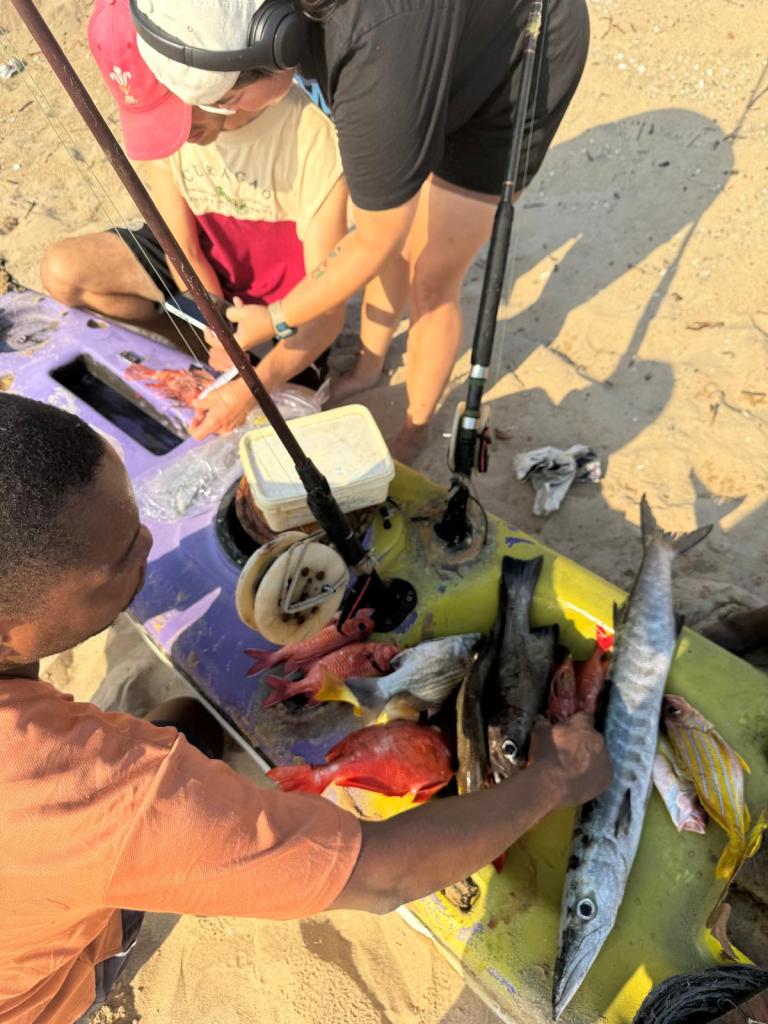
The half of our group not busy planning and delivering lessons in Giunjata primary school spent the week collecting vital fisheries and reef health data. The week marked our busiest week for fishery data yet this session (if you saw our last blog you know this followed a few weeks of little fishing activity!) On one single day, our mighty team measured, took photos of, logged method of catch and frequency, and identified the species of 122 individual fish, caught in nets, by spearfishermen or in kayaks. This data informs the method and approach of the sustainable fishing project – aiming to reduce the herbivorous fish caught, reduce net use and promote kayaks as an alternative source of fishing and protect food security in the region.
As part of our fishery research, we also collect tissue and vertebrae samples for elasmos species caught (sharks and rays). This week, one hammerhead shark was caught and so we got to work collecting and preparing our samples to send to the lab. These samples let us know the age and species of the animal, shedding light on animals not reaching maturity and overall population health. We really enjoyed our days on the beach interacting with the fishermen!
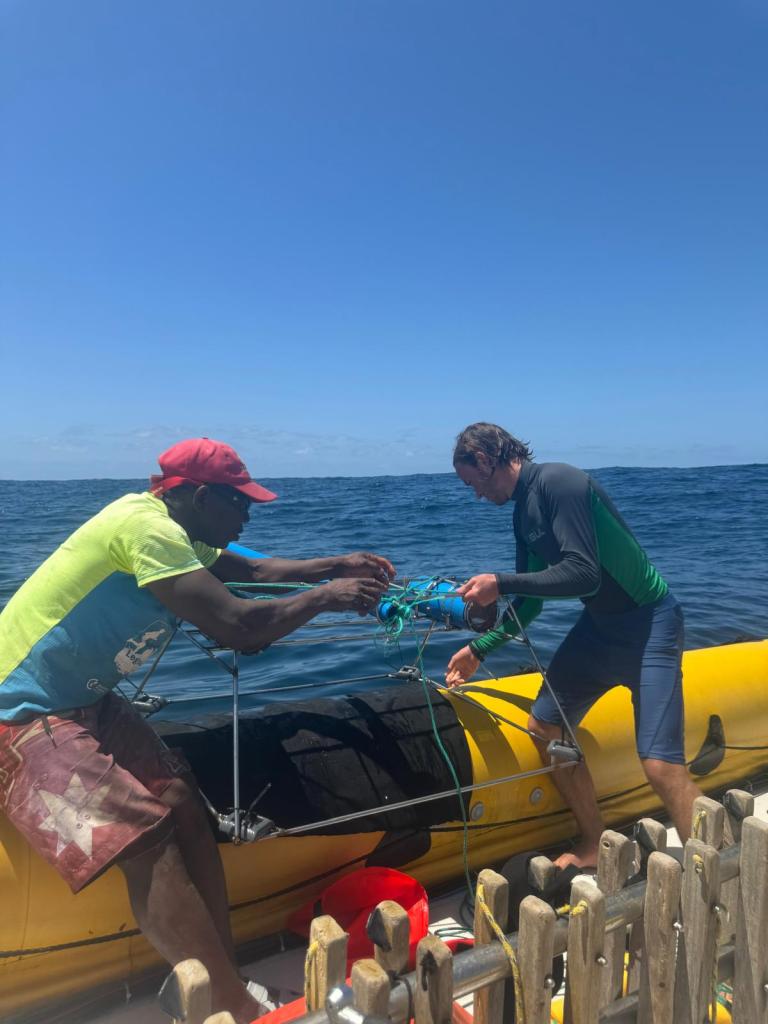
The team collecting fishery and reef data was also able to join the incredible LTO full timers on a BRUV collection trip. The BRUVS are Baited Remote Underwater Videos placed in all three bays of Jangamo bay. The GoPros inside take continuous footage of species visiting the BRUVS, mostly apex predators, shaping knowledge on species behaviour. We were excited to be able to join the team, put our best (questionable) snorkelling and spotting skills to the test and observe how the team dives down to collect the BRUVs. A successful successful day out on the water by our standards!
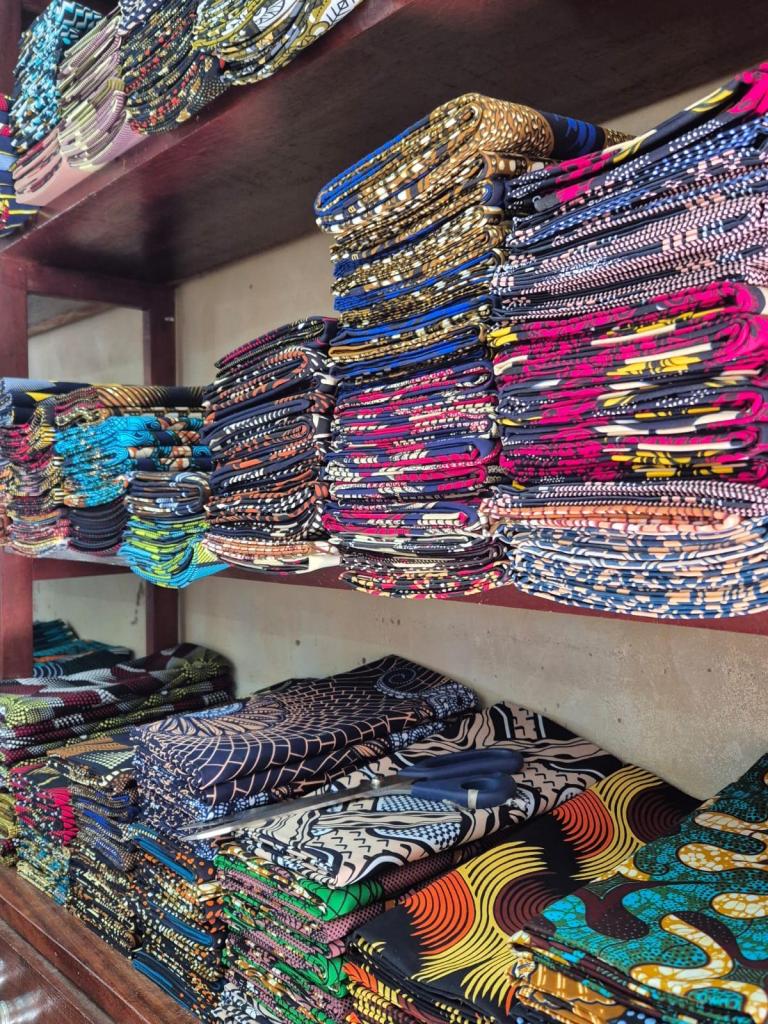
Two of us had a day trip to Maxixe (pronounced Masheesh)! We had to go into the city to get our visas renewed and maybe make a detour to grab coconut breads and capulanas. We also definitely had a new hairstyle after returning to Guinjata from spending almost 2h30 on the back of the truck… Immigration has our passports for now. So Moz may be our new home? No complaints here!
One of the volunteers had the chance to take part in an extraordinary dive… A gigantic pile of tangled nets is stuck in a rock on a 26 m deep bottom at a diving site. Two challenges lied ahead. First, to cut off the floating part of the mass and raise it to the surface using a buoy – we needed two dives and four then five experienced divers to achieve this. The second challenge, and not the least, was to reassemble the whole thing on the boat… It took 3 hours of effort and cutting with diving knives whole sections of nets and huge ropes to recover part by part. Why so much effort for such an operation? Because these ghost nets continue to catch fish, sharks, rays, dolphins and turtles, all of which eventually drown. The ocean has one less trap! See the photos on LTO’s instagram!
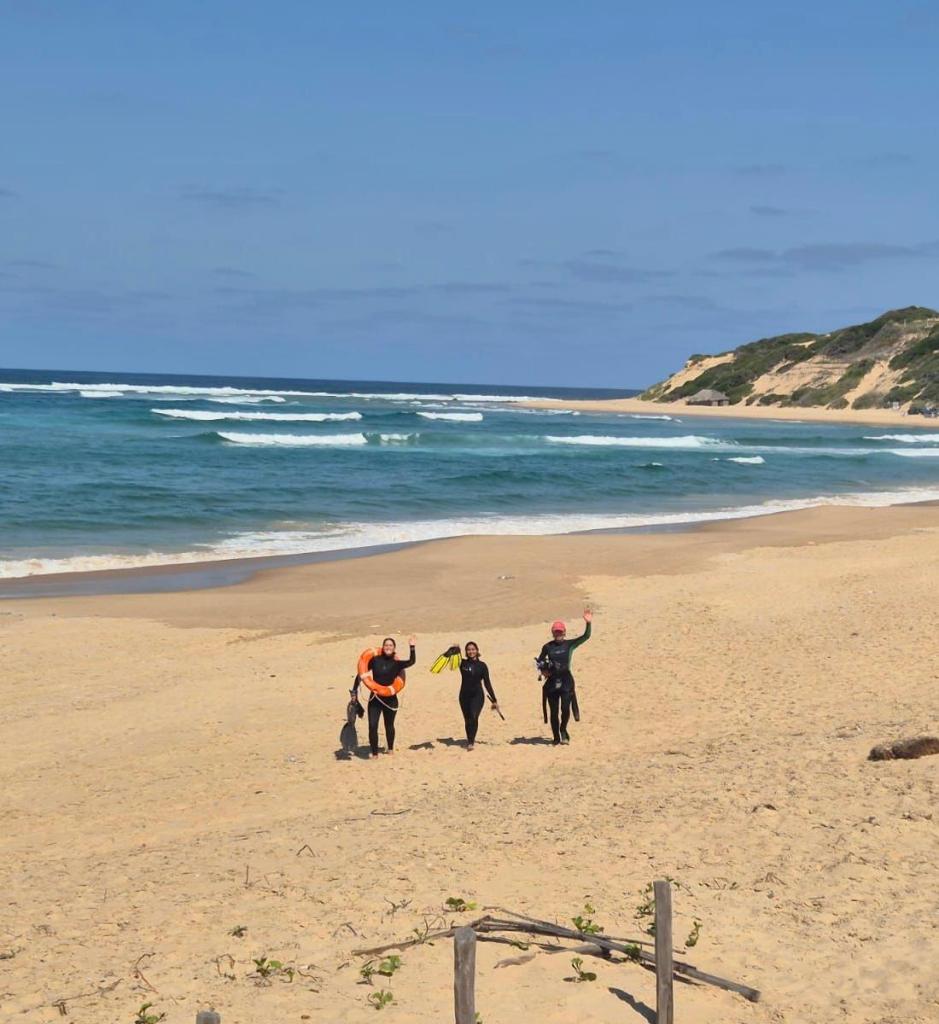
This week we had the opportunity to go to the top of the world- a tall sand dune overlooking the area- to watch the sunset. It was beautiful and we had lots of fun jumping down the side of the dune. An amazing end to our fourth week of activities. This week Bleddyn and Ruhi got signed off as rescue divers! It was such a great experience, and our instructor Dana was the best. The exercises consisted of rescuing a breathing/non breathing victim from the water, cpr, finding a missing person and a lot of towing. It wasn’t easy but so rewarding, it feels good knowing how to help in an emergency situation. It was really fun getting to learn the new skills, which were ingrained through repetition. We will remember Anne-Lise’s panicked diver character for a long time, she definitely wins the award for the best victim.