Shell Yeh Blog Post:
(Mon, Juan, Lily & Holly)
A full week back at school!
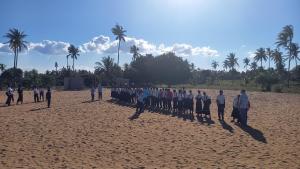
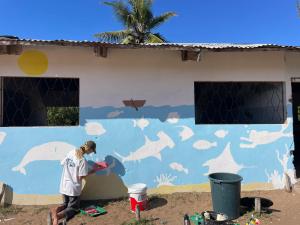
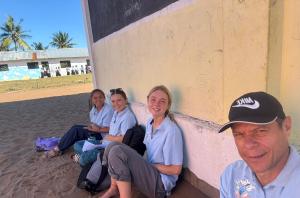
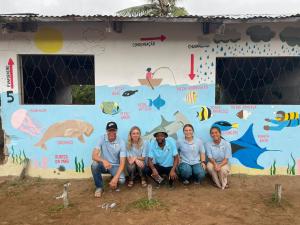
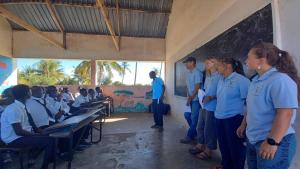
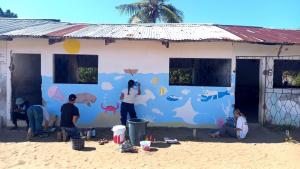
This week, we headed to the local primary school of Pandaine to assist Pascoal in teaching an optional marine-focused class and decorate a classroom wall with as much ocean biodiversity as we could fit!
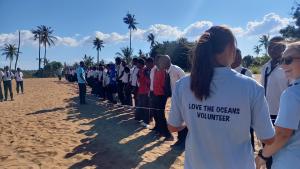
Our theme for the classes this week was ‘marine mammals’ so we started with an overview of the biology of mammals, how they’re different to other ocean animals (predominantly fish, which the kids quite often – understandably – mixed up with mammals!). Finding ways to make the classes interactive and fun was sometimes challenging given the size; our first class had 100 students! With Pascoal’s help we engaged the pupils with recordings of dolphin vocalisations and venturing into the courtyard to show the real sizes of blue, humpback and southern right whales. It was highly entertaining – and educational, of course – for us all!
Over the week we focused on dolphin communication hence recordings of their vocalisations as well as whale size and any challenges this brings to the megafauna. The species we focused on are local to Mozambique, found in the Indian Ocean, and are sometimes even seen breaching from the beach!
The classroom wall mural was a great way to communicate science in a creative way – we’ve seen many of the animals we drew on our dives, although some are still on the wishlist (aka dugong & mantas). We painted in the sunshine and tropical rain; by the end of the week we had made a big bright mural showcasing Mozambique’s wealth of ocean life. Come Friday, the students were so engaged in the learning that mammal fact recall was earning them pens (Pascoal’s reward for a good answer) left right and centre.
Now very content with a wholesome and rewarding week, we’re looking forward to volunteer life back in the world of fish and whales!
No Fin Left Behind Blog Post:
(Dylan, Lena, Emily & Brienna)
Monday:
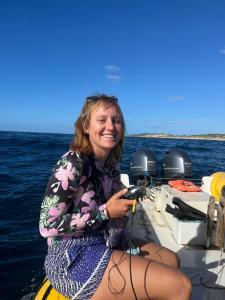
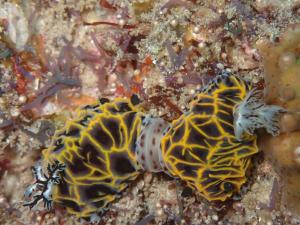
We started the week with another dive, and it’s nice to see how quickly everyone is improving both in the field and in terms of teamwork and data collection. The transition went smoothly, and afterwards we had fun searching for nudibranchs. We even spotted a few dragon nudibranchs, which was a highlight! One of us stayed on the boat to record whale songs, and the presence of whales throughout the week is just a truly special experience, especially hearing them under the water.
Tuesday:
Today was another epic double coral transect day woohoo ! The two who didn’t whale watch/listen yesterday swapped roles and equally did one dive for coral surveying and then stayed on the boat for the whale data collection. Brienna took on the hydrophone role during the first transect, and the coral transect dive second, whilst Emily did the opposite. Although whale vocal activity was quieter than usual, scanning the horizon for breaches or fin slapping is always a highlight that we love to do.
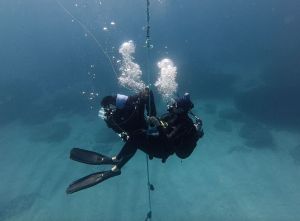
Our coral transects are getting smoother and faster: we’ve built real confidence rotating roles between benthic coverage, non-cryptic videography, and quadrant data collection. Our dives from today wrapped up with a favourite nudibranch hunts ! It was super successful as we spotted tons of colourful nudis, Emily also spotted a very camouflaged common octopus chilling on the reef with Dylan captured some top-tier footage.
Back at camp, we input our data from the day, getting better each time with our fish identification, which makes logging efficient and more accurate. Another successful field day in the books, full of teamwork, data, and marine life!
Wednesday:
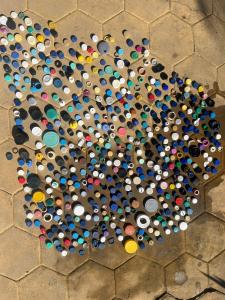
Wednesday started off with a beach clean! We spent an hour gathering ocean trash that washed up on the beach, this again was a stark reminder of the global ocean trash crisis, its very sad but not surprising to see ocean trash that doesn’t originate from Mozambique wash up. After logging this data the team then went for some whale watching to log behaviours and witness the humpback whale acrobatics from land!
However, Dylan had a slightly different day! He was able to join the LTO staff team for a day of mussel spat deployment for the mussel growth trials for LTO’s gender equity projects while also having the challenge of filming some of the process! The growth trial is important to understand harvesting potential of mussels and this protein as an alternative to unsustainable fisheries, and a source of income for local women. The women involved are currently enrolled in LTO’s ocean literacy classes and swimming lessons.
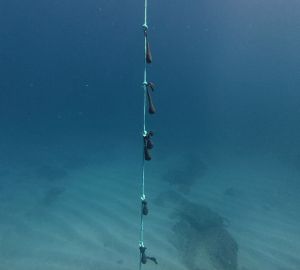
For the trial deployment, we went out by boat to a local dive site to a large concrete anchor block the LTO staff sunk last year to anchor the mussel growth chain and other marine equipment. The mussel chain has knots along its length, with each knot serving as an attachment point for a bag of mussel spat (baby mussels). The aim is to monitor how long it takes for the mussels to grow to a harvestable size, with the goal of enabling the community to scale up mussel farming as an alternative livelihood, particularly for women in the area.
It was inspiring to see how LTO is actively promoting women’s involvement in conservation!
Thursday:
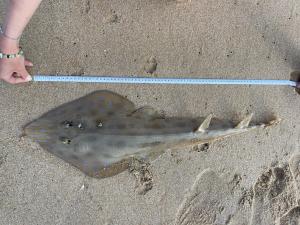
The end of the week only means one thing…FISHERIES!! No fins left behind was split into two groups of two with one group going to each fishery, Paindane and Guinjata. Emily and Brienna (me) were sent off to Guinjata on Thursday. We started our day off with a very big splash (literally) as a humpback whale breached right in front of our station. Our day started off strong and emotional as a spear fisherman brought in a catch of a juvenile scalloped hammerhead shark and a critically endangered female gray spotted guitarfish. We were able to secure vertebrae from the shark in order to identify how old it was and fortunately but unfortunately we were also able to bring back 4 unborn baby guitarfish from the pregnant female and preserve one in formaldehyde for future studies.
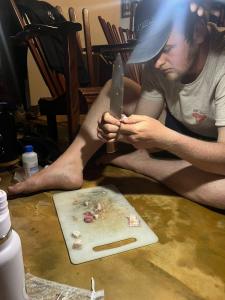
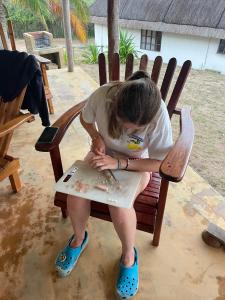
After a busy morning came a long day of bursts of rain and wind. Days like these are tough with a strong mix of emotions, but with the determination to collect data for LTO’s initiatives, we endured, persevered, and pushed forward. Once the time hit 4pm, we walked back to our base where we cleaned the vertebrae, took tissue samples of each fetal guitarfish, and logged our data.
Friday:
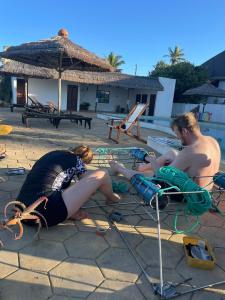
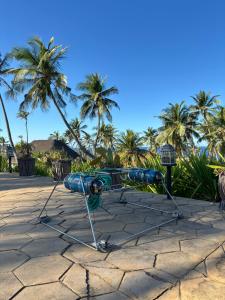
Friday was a big day as we deployed three underwater remote video systems (BRUVs). It was an exciting process from preparing all the equipment to the final deployment. Teamwork, clear communication, and everyone knowing their role made the operation run. Expedition vibes definitely came up. We spent the rest of the day at the fisheries, where we also learned how to take vertebrate samples.