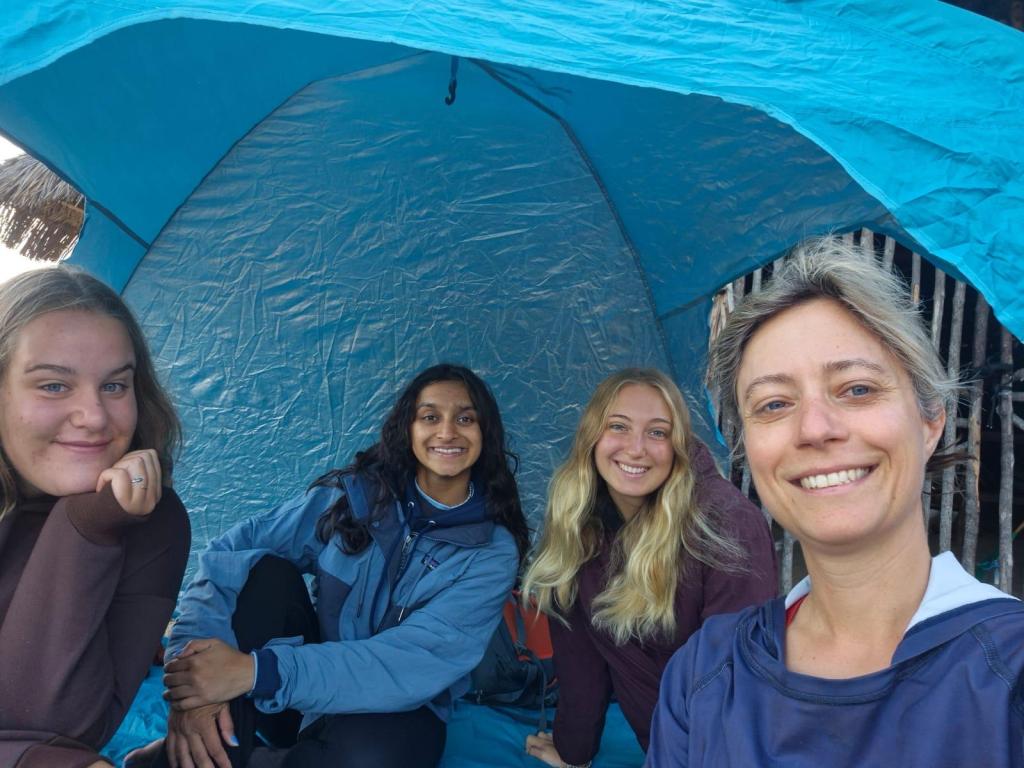
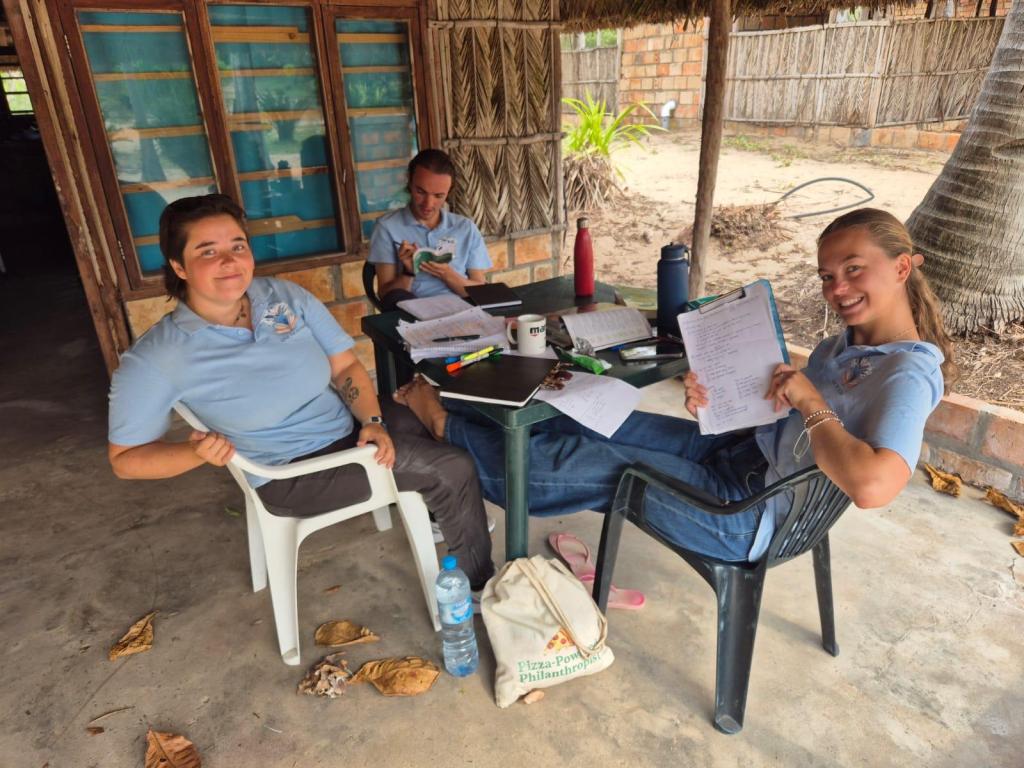
Guinjata, Paindane, Guinjata. Three fisheries in a row of three days. And we got… wind, and cold, and rain! The weather was so bad almost no fishermen dared to fight it. We only recorded 8 fish in total. Should we be disappointed? Should we invent fish to have full data sheets to show? No, definitely not. No data is still data. And it tells a story, the story of fishermen who are dependent to the ocean to feed their families, and who sometimes can’t go out fishing because the ocean is stronger. Or who will yet go even in unsafe conditions. So even though we sometimes feel useless when there’s no action going on, that data is as important, and we commit to it.
We had our first snorkel transect this week (yayyy)! One group toughed out choppy ocean conditions to collect data at Coral Gardens. We noticed from quadrat sampling that coral gardens (protected in a bay by large rocks) mostly had soft corals while our dive sites further offshore mainly had hard coral… interesting… Also, the transect was a great way to work on some freediving skills as a pair of us had to descend close to the reef at the same time. A rewarding excursion but safe to say we all slept quite soundly afterwards!
Friday’s national holiday led us to do a competition beach clean between our two groups and set to work with a two-hour time limit. This may sound trashy but we proceeded to sort out each item into different categories such as plastic bottle caps, lighters, large/medium/small plastics and so on. We put on some tunes, got to work, and had a little karaoke session while cleaning up our beaches! All together we collected around 8000 pieces of rubbish!
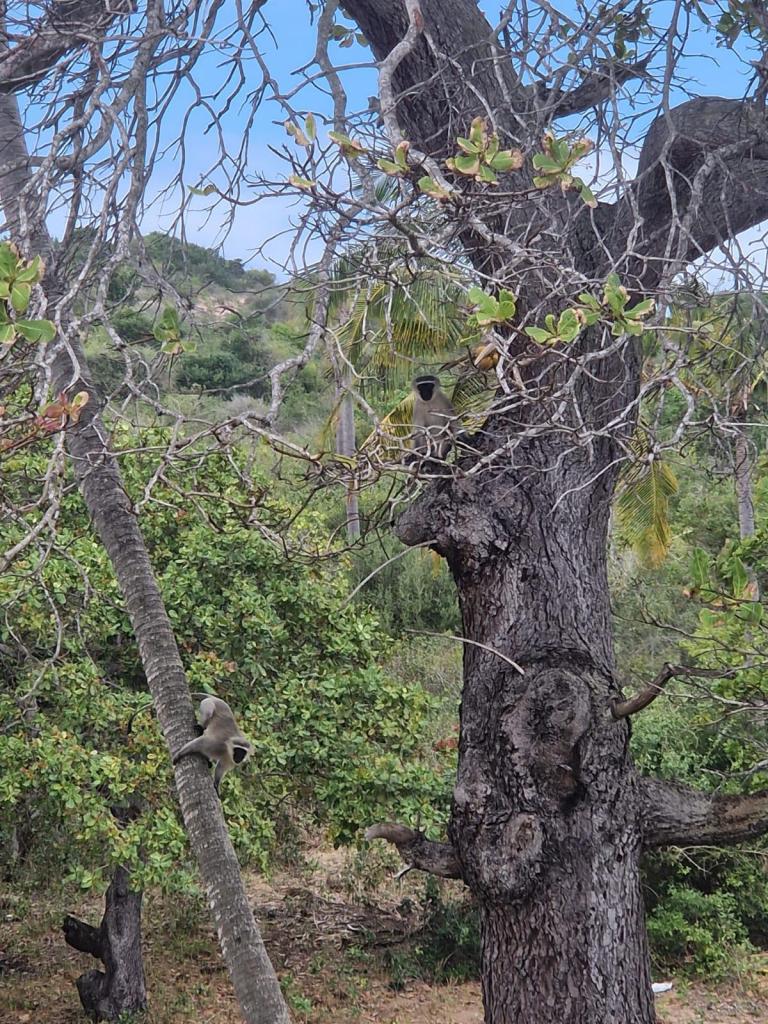
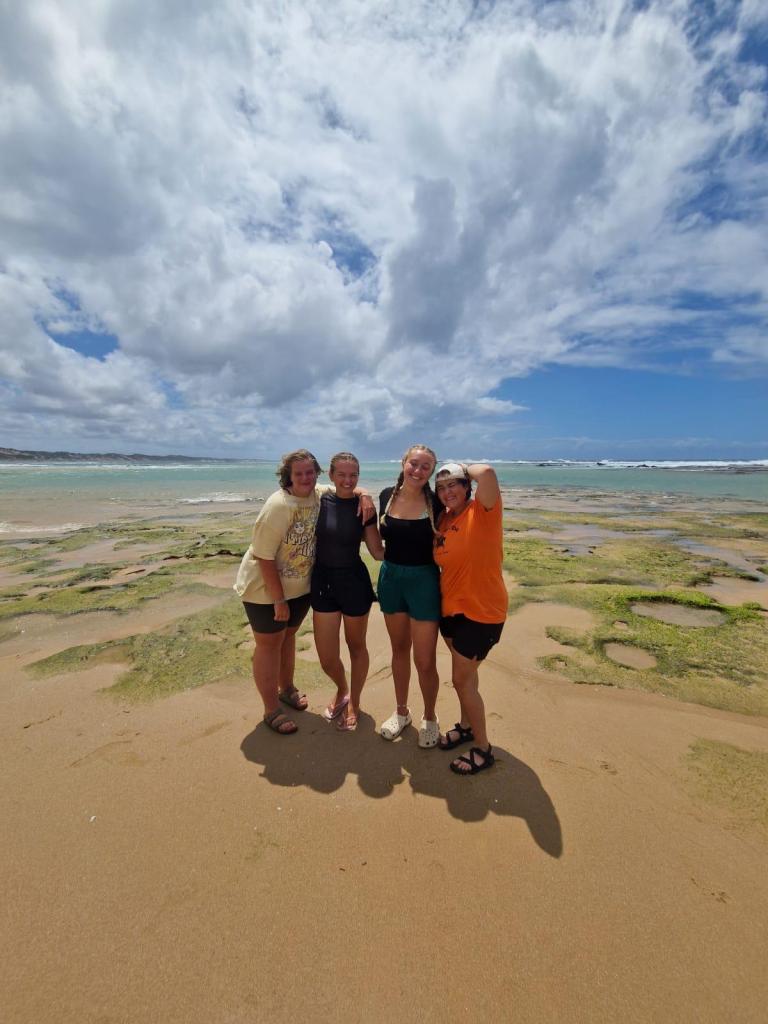
Waking up after a good night’s sleep, we headed down to the dive shop bright and early to prepare for our weekend fun dives. As the weather had other ideas, only the members of our team working towards their rescue certification could go out on their first dive. The rest of our team went on a tour of the Coconut Bay area known for its tide pools, full of life at the smallest scale! We walked along with the tiny pools of shells, fish and algae, marvelling at the ability of organisms to adapt to and endure even the most turbulent environments. Even as we came back, the adventure wasn’t over as we saw vervet monkeys for the first time!
This week, it was time for three of us teach in the local Guinjata primary school, in a class of 67 kids. It was such a special experience, and a real pleasure teaching such enthusiastic students. This weeks theme was ‘The Role of Fish in the Ocean’ , which was received very well. The kids were so energetic and ready to learn, since most of them had strong connections to the sea and marine life. We realised fast that they knew so much about the ocean already and were eager to share their experiences, it was a learning experience for both the teachers and students.
To begin the lessons we played a short game of simon says, which finally worked well in our last lesson! Our first lesson explored the diversity of fish, from dominoes at 7cm to 12m whale sharks. This lesson was one of the more challenging, but we got through and learnt a lot. The second day, our focus was on food chains and trophic cascades. It was really fun having them pretending to be sharks, fish and algae! The last lessons looked at sustainable fishing practices and the importance of sharks and herbivorous fish. It felt good discussing the effects of fishing with nets, and the benefits of using a kayak.We all really loved teaching this week. It wasn’t always easy, sometimes being a bit chaotic. It was a great opportunity for us to teach, learn and strengthen our public speaking skills. But most importantly planting a seed of enthusiasm and appreciation for the ocean in each child.
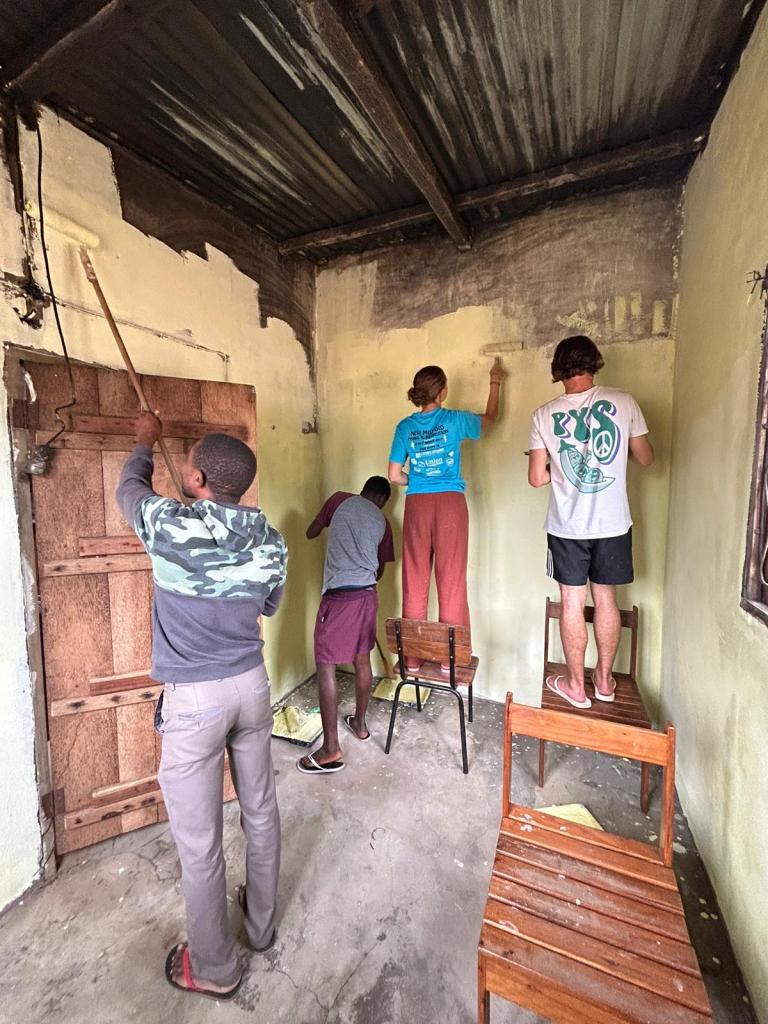
Once we had finished teaching for the day, we painted some marine themed murals on the walls. This was really fun, we had Zebrasharks, a triggerfish and some singing whales.